Sunday, March 27, 2016

My Brick Wall is Really Made of Stone! Pt II

The infamous "brick wall" is a genealogist's nightmare. We have all been to the point where our research has reached a dead end. My "theoretical" brick wall is that my Livingston ancestors were not found in documents prior to 1866.  However, I recently found out what my brick wall is composed of in real life. That information helped me break through the wall and locate my ancestors in 1850.


Since my 3rd great-granduncle Boston Livingston (1817-1880) died in an accident involving gravel, I did a Google search of stone quarries in Orangeburg during the 1800s. I found a place that tied to Boston Livingston called White Hill Plantation. White Hill was located in St. Matthews Parish, Orangeburg County, South Carolina. The original plantation lands were located about six miles from the city of Orangeburg off US Route 601, right before the Calhoun County line. Near or on the property was a hot spring called Huffman or Hoffman Springs. The Springs were more or less in the right general area, just east of the intersection of I-26 and Belleville Road. It was a small fairly deep clear pool and you could see the water boiling up through the sandy bottom. The construction of I-26 highway may have destroyed it. St. Matthews Parish is now the seat of government of Calhoun County.

The South Carolina Plantations website had the following facts about White Hill and its owners:
  • 1799 – Dr. Van de Vastine Jamison was the original owner of White Hill Plantation. Dr. Jamison was born on March 24, 1765 in Bucks County, Pennsylvania. He was in South Carolina by 1792 and was counted in the 1790 Census. He was listed as the only person in his household - unmarried and owning no slaves. On January 22, 1799 he married Elizabeth Rumph, daughter of Jacob Rumph. They made White Hill their home and had 7 children.
  • 1809 – Dr. Van de Vastine Jamison purchased 92 acres in the vicinity of White Hill. The area was referred to as Little Bool Swamp which is the present-day township of Bull Swamp. It is assumed that he added this acreage to White Hill.
  • 1810 – Dr. Van de Vastine Jamison did not like the fact that a public road ran directly through his property. He petitioned the legislature to alter the route. This route was probably US 601.
  • 1814 – Elizabeth Rumph Jamison died. Dr. Jamison never remarried.
  • 1820 – A plat showed Dr. Van de Vastine Jamison as the owner of White Hill.
  • 1825 – Dr. Jamison was harvesting the oyster shells on his property. He burned down the shells to produce lime. Lime was used in the Carolinas for construction materials such as limestone and for indigo making.  Robert Mills wrote of a peculiar sort of oyster shell found there which was longer than those found at the seashore. "In Dr. Jamison's plantation . . . ten hands can raise in a week as many of these oyster shells, from their bed, though seven feet below the surface as when burnt, will yield twelve hundred bushels of lime." In writing of the geology of Orangeburg District, he added: "Considerable bodies of the compact stone rock run through the district from northeast to southwest. Jamison is the only one that has attended to this rock so as to derive any advantage from quarrying and burning it. He has been for many years engaged in supplying the demands of the district for lime, both for building and for indigo making, for which it answers very well. The lime made is of an excellent quality. Dr. J. makes about 3,000 bushels annually, and, could he find sale for it, could prepare ten times as much.” Limestone was most popular in the late 19th and early 20th centuries. Roads, highways (US 601 and I-26), train stations, banks and other structures from that era were normally made of limestone. Therefore, my genealogy brick wall was made of limestone!

  • 1833 – On February 22nd, Dr. Jamison released title to "White Hill plantation, all negro slaves, horses, cattle, hogs and farming utensils to John A. Tyler and Van de Vastine Samuel Jamison." John A. Tyler was his son-in-law and Van De Vastine Samuel Jamison (1808-1876) was his son. V.D.V. Samuel Jamison was district commissioner over the legal dispute concerning the estate of Barnet Livingston in 1867.  
  • 1836 – Dr. Jamison died on December 15th at Pine Grove Plantation in St. Matthews Parish. His body was brought to White Hill and buried in the family cemetery. He was 71 years old.
  • 1844 – On January 20, John A. Tyler and Elizabeth Tyler sold White Hill to Dr. Willis Wilkinson, a physician in Charleston, SC.
  • The plantation consisted of 1,395 acres. The family cemetery was excluded in the sale of the property. That tract of land was reserved for the Jamison family. The Jamison Family Cemetery is located on Belleville Road about five miles northeast of the city of Orangeburg. I do not know if slaves were buried on that site. It is worth looking into to see if there is a preserved section for the burial of enslaved persons.
  • 1849 – On September 21, Dr. Willis Wilkinson sold White Hill to Dr. James Jenkins. James Gwyn B. D. Jenkins was a physician who practiced in the Orangeburg District before the Civil War.  He was born on March 24, 1805, the son of the Reverend James and Elizabeth Ann Gwyn Jenkins.  Dr. Jenkins was married first to Elizabeth Moorer and second to her sister, Electra Moorer.  He and his family lived in the village of Orangeburg, where he practiced medicine in St. Matthews Parish for 25 years. After giving up the practice of medicine, he turned his attention to his farming interest and became one of the best farmers of his district.  In 1862 and 1863, Dr. Jenkins represented Orange Parish in the state legislature. He died on August 10, 1866 of a hemorrhage of the lungs at age sixty and was buried in the Presbyterian Cemetery in Orangeburg. During his ownership the plantation it was known as Jenkins' Hill, located in Lexington, Orangeburg District, between Santee and Edisto Rivers north of Belleville Road.
  • 1850 - An inventory and appraisal of property following the death of Dr. Willis Wilkinson was conducted. Approximately 160 Negroes were named in the document.
  • 1861 – An account of a tornado appeared in the Charleston Mercury on Tuesday May 7, 1861. “I heard of more destruction from the tornado.  Dr. Jenkins’ place is in ruins and he narrowly escaped with his life.  Two Negroes were killed.  About 1 p.m. I passed the scene of the tornado.  Trees were demolished." (S.C. Historical Magazine Volume 48, 1947 – page 156 - Diary of Samuel EdwardBurgess 1860-1862)

I wonder if I am related to the two unnamed Negroes that died during the storm. The plantation house was completely damaged and was subsequently deserted. The rock quarry remained untouched and was in operation till the turn of the century.

The former site of Jenkins Hill plantation is now a luxury subdivision and vacation getaway

The chronological list of plantation owners were – Dr. Van de Vastine Jamison (1799-1833); John A. Tyler and Van de Vastine Samuel Jamison (1833-1844); Dr. Willis Wilkinson (1844-1849) and Dr. James Jenkins (1849-1866).

The real reason for my theoretical brick wall was that I couldn't find my Livingston ancestors under Livingston property but rather on the White Hill plantation as Wilkinson property. In the next blog post, I will attempt to identify and track the enslaved persons of this plantation and connect them to the Livingston family.


Monday, March 14, 2016

Boston Livingston - Leave No Stone Unturned Pt I

When I first started this blog post, I had hoped to shed some light on the life of my 3x great-grandfather. Over the last two months, I have been doing some research on who I had hoped was my ancestor, Boston Livingston. My goal was to knock down another brick wall. Some come down in one fell swoop, others piece by piece. This is one of those stories where I have been chipping away at it for years.

I know some of you feel that it seems impossible to get over that "brick wall" when it comes to tracing the lives of certain ancestors. You really do have to put the time in to doing the research and examine all the possibilities.  Just like the title says, the idiom "to leave no stone unturned" means to do everything possible to find something or solve a problem.

Years ago, I initially thought my 3x great-grandfather was Boston Livingston.
The only document about him that I found through the Ancestry website was the record of his death.


Boston Livingston, a married black male farm laborer aged 70, died in an accident involving gravel during April 1880 Willow Township, Orangeburg, South Carolina.

Recently,  I checked for updates of any of my DNA cousins within the Ancestry website that shared a Livingston surname. I found a relative who descended from Marcilla Livingston b. 1872 Orangeburg. Marcilla's death certificate stated her mother's name was Lucy. I also found another relative who descended from Irena Livingston-Phelps b. 1878 Orangeburg. Irena's death certificate stated her parents were Boston and Lucy Livingston. Lucy lived in Hebron Township, Orangeburg during the 1880 census with her children Eliza b. 1862, Luckey b. 1867, Maryanne b. 1870, Marcella b. 1872 (married Donald Livingston), Irena b. 1874 (married William Phelps), Martha b. 1877 (married Govan Millhouse) and Eugene b. 1879. Lucy lived adjacent to white Livingston families.

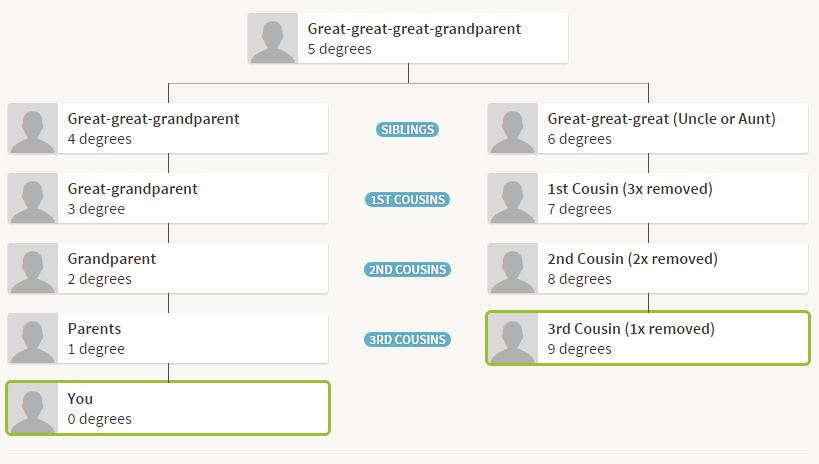
These DNA cousins who descend from Boston and Lucy Livingston are my 5th cousins. That means we share one or both 4x great-grandparents.


This meant that Boston Livingston my 3x great-granduncle. I was disappointed at first.  I was between a rock and a hard place but then I realized Boston gave me a clue already. If I find more records of him then maybe I can find the names of his brothers, sisters and parents.

Since no one was found in the 1870 census, I had to find alternate records within other websites that might include names of my relatives. On the FamilySearch website, I discovered Freedmen Office Records - Orangeburg Hospital Register of Sick and Wounded 1866 to 1868. The Freedmen's Bureau was established by an act of Congress on March 3, 1865. They were responsible for all matters relating to refugees, freedmen, and all lands seized or abandoned during the Civil War. Bureau officials operated hospitals such as Orangburg Hospital in South Carolina. Within these files, I found several individuals with the variation of the Livingston surname.

  • Boston Levingston b. 1817 (age 49) July 2-29, 1866 and (age 51) August 25, 1868 - Retention of urine cytosis.
  • Adam Levinston b. 1821 (age 45) June 28-July 3, 1866 - Ulcer of the leg.
  • Jerry Livingston b. 1825 (age 43) August 23, 1868 - Jaundice.
  • Charles Levingston b. 1826 (age 40) July 9, 1866 - Lost his leg 20 years ago. Charles was a brother of Jerry. Jerry had a grandson named Charlie b. 1883.
  • Rachel Levingston b. 1844 (age 24) August 29, 1868 - Amputation of little toe.
  • John Levinston b. 1846 (age 20) June 28-July 28, 1866 - Fever and dropsy.

Is it morbid to be glad that your ancestors were sick enough to go to a hospital? I am thankful that they did receive medical attention and survived during the post Civil War period of Reconstruction. As luck would have it, there were multiple records of their illnesses. I underlined a few of their medical visits below.


I compared the names from the hospital records to the 1880 Orangeburg census.

  • Boston Livingston was married to Lucy b. 1832 in the 1880 Hebron, Orangeburg area.
  • Adam Livingston was single in the 1880 Liberty, Orangeburg area. He was not the same Adam Livingston that was married to Clarisa in the 1870-1880 Clarendon censuses.
  • Dick (Richard) Livingston b. 1825 was married to Eliza b. 1830 in the 1880 Liberty, Orangeburg area. They would later divorce.
  • Jerry Livingston b. 1820 was married to Katie b. 1825 in the 1880 Liberty, Orangeburg area. Their daughter Salina b. 1862 married Jim Zeigler b. 1839. 
  • Rachel Livingston b. 1844 was a widow in the 1880 Liberty, Orangeburg area. Her daughter Chloe b. 1864 married Enoch Pou (Pough) b. 1858. Rachel was a neighbor of Jerry. 
  • Charles Livingston was not found in Orangeburg the 1880 census. He might have been the same person as C. Livingston b. 1830 married to Liza b. 1835 in the 1880 Williamsburg, SC census.
  • John Livingston was also missing from the 1880 census. He might have died or relocated somewhere else. He might have been Jerry's son and Rachel's husband.
My 2x great-grandparents Jace b. 1854 and Dorcas Livingston b. 1852 lived in Liberty, Orangeburg during 1880. I couldn't find my 3x great-grandmother Idella Livingston b. 1830 in that census. I did find others though. Clinch Livingston b. 1830 was married to Clarinda b. 1830 in the 1880 Liberty, Orangeburg area. They also named a daughter Chloe b. 1855. Satira (Satirya) Jenkins-Livingston-Jackson b. 1835 married her 2nd husband Samuel Jackson b. 1840 around 1866 in the Hebron, Orangeburg area. Her first husband was a Livingston (first name unknown). One of her daughters Louvenia Livingston b. 1857 married January Hart b. 1850. I thought Louvenia was Jace's sister but now I know she was not. 

So who was my 3x great-grandfather? I am not sure yet. Adam looks promising however I cannot confirm anything yet. My DNA did point out that Boston was related to one of my 3x great-grandparents so at least I have that to go forward. I made enough mistakes by assuming relationships without proof.

As I said earlier, I have a huge brick wall with the Livingston Family. Boston's DNA provided the first chip I needed to whittle away at the problem.

Next time, I will show you what that brick wall was "made" of! 

Wednesday, January 6, 2016

The Hankerson Boys/Nancy Young Mysteries Part III

In the last two blog posts of the Hankerson Boys/Nancy Young Mysteries I uncovered several things:

In the finale of this trilogy we reveal the true name of Missy II. She was the wife of Simmon and the mother of Simon Hankerson. This Missy would be my 4x great-grandmother. In addition, I was able to identify other relatives of the Hankerson family and their immediate descendants.


When I first contacted my cousin Charles Hankerson, I didn't know at the time we were related. He was gracious enough to show me all his hard work tracing his family tree. On the Hankerson Family website, he provided the July 5, 1788 Will of Robert Hankinson. Robert owned the Crackers Neck Plantation in Winton (now Barnwell) County, South Carolina.  In this will, Robert had 5 groups of enslaved persons distributed to his family members upon his death:

  • To wife Susanna Hankinson - Old George, Stepney, Old Sasar and Bess;
  • To son Richard Hankinson - Simmon, Sarah, Butler, Hepney (or Stepney), Diana and Hannah; 
  • To daughter Sarah Hankinson - Young George, Sybe, March, Molly and Lucke;
  • To daughter Pattey Hankinson - Lewis, Sarah (his wife), Lide, Mourning and Jim the Blacksmith;
  • To daughter Mary Hankinson - Jammy, Mary, Dotty, Jeck and Tome.

There were 25 enslaved persons at Crackers Neck in 1788. Normally, the Last Will and Testament is all you would need to identify your ancestors. This document did not fully distinguish which of the enslaved were adults and children. That is why Charles chose a generic name Missy as a place holder for Simmon's wife. This information remained unchallenged for years until I put my detective skills to work and looked closer at all the documents Charles had in his possession.

Robert Hankinson died by November 3, 1788 and his Will was proved in Winton County Court. An Inventory and Appraisal of his estate was conducted on November 29th. This time, 24 enslaved people were found. The inventory also excluded children's names and provided net worth of the following:


  • 2 Negroes Stepney & Bess his wife 100
  • 2 Do. Simon & George 155
  • 2 Do. Tom & Old Seasor 97
  • Dol a wench, Sib & 3 children 190
  • Lewis, his wife Sarah & 2 children 175
  • Jack, a fellow, Doctor, a fellow 130
  • Sarah & 4 children 160
  • Tom & his wife Mary 100


When a side-by-side comparison of the Will to the Inventory is made, the following assessment was determined:


  • Robert Hankinson kept family groups together when he distributed assets to his children.
  • Old George died between July and November 1788.
  • Stepney was married to Bess
  • Lewis and his wife Sarah had 2 children named Lide (Lydia) and Mourning.
  • George (Young George) and his wife Sib (formerly Sybe and short for Sabina) had 3 children named March, Molly and Lucke (short for Lucy).
  • Tom (formerly Tome) was married to Mary.
  • Old Seasor (formerly Old Sasar) was short for Caesar.
  • Tom (with Old Seasor) was probably Jim the Blacksmith.
  • Jack (a fellow) was Jeck.
  • Dol (Doll or Dolly, a wench) was probably Dotty.
  • Doctor (a fellow) was probably known as Jammy (short for James).
  • Simon (formerly Simmon) and his wife Sarah had 4 children named Butler, Hepney (or Stepney), Diana and Hannah.


So now I know that Simon was married to Sarah, making her my 4x great-grandmother! 


In the Hankinson inventory, infants and children were each valued at $20 U.S. Colonial Currency (pictured above). Each wench and fellow was worth $65. I know from doing research that terms like fellow and wench refer to teenagers (not always but for the most part). Adult males in their prime, skilled tradesmen and women of child-bearing age were worth between $75 and $80 respectively. Older men and women were valued at $50 each. The elderly were classified at little ($17) or no value. The value of $1 in 1790 is equivalent to $22.75 in 2016. The family of Simon and Sarah (assuming Simon was valued at $80 or 130 British Pounds) including children were valued at $240 in 1788. That amount is equivalent to $5,460 in 2016.

After reviewing more of Charles' documents, the following information was found:
On March 9, 1783 William Patterson of Georgia sold 2 Negroes, James and Mary, to Robert Hankinson. James was probably Jammy and Mary was the wife of Tom.

No further documents were found on Simon and Sarah's parentage. It does seem likely that Sarah was the daughter of Stepney and Bess since one of her sons was named Hepney/Stepney. Old Sasar (Caesar) might have been the father of Simon. I have yet to prove these theories but I will in a later blog.

So what happened to Simon and Sarah's family? True to his word, Simon, his wife and 4 children were sent to Richard Hankinson after his father died. Richard died in Barnwell and an inventory of his estate was taken in 1828.


How does it all fit together? In my last blog, I posted this inventory. Now here is the update:

  • Simmon (Simon) was known as Old Simon and valued at $25. Simon died around 1840.
  • Sarah had probably died by the time of this appraisal.
  • Butler was valued at $500. (Butler was a popular name among the family. I blogged about another one as the son of Abram and Patty).
  • Hepney (Stepney) had probably died or been sold away by the time of this appraisal.
  • Diana had four children named Maria, Sarah, Harrington and Jesse. They were valued at $1,500 in total. Jessy (Jesse) Hankinson was found in the 1870 Barnwell, SC census.
  • Hannah had seven children named Moses, Aaron, Rhoda, Sarah, Israel, Stephen and Harry. They were valued at $1,800 in total. Hannah was married to Old Peter was probably the mother of Young Peter. Peter, Hannah and the children would be transferred to John Haynes, a neighbor of the Hankinsons, as mentioned in his 1830 will. Peter Hankinson b. 1818 (formerly Young Peter) the 1870 Barnwell and 1880 Aiken, SC censuses. Israel Hankinson b. 1824 was found in the 1900 Barnwell, SC census.
  • Elsey was probably the wife of Butler. Their children include John, Butler, Joe, Phoebe and Lynda. Elsey and her children were valued at $1,200.
  • Polly was mentioned as a child of Old Simon and Sarah that was born in 1800. Polly's children include Stephen, Doctor, Patsey and Will. Perhaps Polly was the wife of Doctor mentioned in the will of Robert Hankinson? Another theory could be that Polly wasn't the actual child of the Hankinsons but was the wife of Hepney (Stepney) since the eldest son was named Stephen. Polly's daughter Patsey was actually Tenah Hankinson who married Henry Floyd. Polly and her children were valued at $900.
  • Simon (Simon Hankerson) was known as Young Simon and valued at $450. He was the son of Old Simon and Sarah born in 1790. He was first married to Betty and later married to Mary Floyd, the sister of Henry Floyd. Simon and Betty were my 3x great-grandparents.
  • Simon (Simon Hankinson Jr.) was known as Little Simon and valued at $450. He was the son of Young Simon and Betty born in 1825. He died in Georgia. He is not to be confused with Simon Hankerson Jr., the son of Simon Hankerson and Mary Floyd.
  • Betty was the first wife of Young Simon. She was the mother of Little Simon, Jerry, Judy and Sarah. Betty and the latter 3 children were valued at $800. She would have one more daughter named Nancy, my 2x great-grandmother. 
  • Doll (formerly Dotty) had two children Winna and Solomon. Doll and her children were valued at $500. Winna would later marry Jesse, Diana's son. Their daughter was Esther McCreary. Solomon Hankinson b. 1825 was married to Minty b. 1815 in the 1880 Aiken, SC census. The couple named one of their daughters Dolly b. 1864.
  • Captain was also another child of Old Simon and Sarah. He was valued at $500. Captain was married to Sally. Their children included Josh, Solomon, Will and Rachel. Sally and her children were valued at $1,200. Captain and Sally died before 1870 as stated in Rachel's Freedman's Bank Record.


The Hankinson/Hankerson family is quite large. There were more enslaved people in this inventory but it will take a while to decipher their relationship to me. Unfortunately the will of Richard Hankinson was not available for viewing. With both pieces of the puzzle, I could have had more insight into all these names.. Sometimes the key to break down brick walls lies in examining documents of neighbors and in-laws of the immediate family. In a perfect world you would have the right tools such as a will, an inventory, maiden names, bank records, death certificates, bills of sale and DNA test results full of cousins. Most of the time, you would get only several pieces of what you need. But do not give up hope, there is nothing like a good mystery and mysteries are made to be solved!

Thursday, December 17, 2015

The Hankerson Boys/Nancy Young Mysteries Part II


In my last blog post, I proved through DNA that Simon Hankerson Sr. (1790-1879) was the father of my 2x great grandmother, Nancy Young (1830-1870). Simon married twice and the name of Nancy's mother was yet to be identified. I believe that I have now solved that mystery.


In an earlier blog, I shared that Nancy died young and during that time the record of her death shown above did not capture the names of her parents. I discovered a court case that mentioned Simon had 10 children with his 2nd wife Mary Floyd in Barnwell, SC. The court record stated Simon was a widower who married Mary in 1838. All ten children were identified. Nancy was not included in this list.

So who was Simon's first wife? Did she have any other children besides Nancy? My Hankerson DNA cousins all matched to Simon and Mary. The Hankerson family website created by one cousin supplied the name "Missy I" as a marker. This meant that he didn't know her real name but wanted to make sure she was recorded in the tree to be identified later. He also included the same name "Missy II" for Simon's mother, whose real name was unknown.

By careful examination of certain documents I can now honor my Missys with their proper names. The actual name Missy does not show up in any records for the slaveowners of the Hankerson family going back to the mid 1700s. Therefore my 1st task was to find out what names show up as common between my Young and Hankerson ancestors.

It was common practice to name your children after yourselves and your parents. That was partly the case with Robert Young Sr (1810-1885) and his first wife Nancy. Between 1860 Four Mile Township, Barnwell County, SC and 1870 St. Peter's Parish, Beaufort County, SC, I identified the following children:
  • Robert Young Jr. (1845-1939) He married Tena Grant and had at least 8 children. His death certificate only mentioned Nancy Young as mother.
  • Loreander Young (1847-) No record of her was found after 1860.
  • Josh Young (1852-) He married Julia Wright and had at least 4 children. He died prior to 1900.
  • Louisa Young (1856-) No record was found after 1880. She was named after her aunt Louisa (1822-), the wife of Wiley Young (1818-).
  • Alfred Young (1860-1900) He was my great-grandfather. He was married to Charity Malery (1856-1900). I wrote a blog post about them. They both died prior to 1910 with no death records. 
  • Betty Young (1865-) She might have been known as Nancy Young in later censuses.
Now that my DNA confirmed that Nancy was the daughter of Simon Hankerson, my 2nd task was to locate Nancy in any archived records. Simon and his father Old Simon were formerly enslaved to Robert Hankinson and his family of Winton (now Barnwell) County dating back to the late 1700s. In Robert's will he gave possession of Old Simon to his son Richard Hankinson. When Richard died in the mid 1820s, he distributed his slaves to his children. I needed to find Nancy between 1830 to 1850 in Barnwell. I found her name in the 1833 court record of Martha Hankinson, widow of Thomas Hankinson. Thomas was the son of Richard. Thomas left no will, however an inventory of 13 unnamed slaves was recorded. In 1833, Martha's court dispute, General Petition 21383319, identified all 13 enslaved persons.


In that list of 13, I found 2 that stood out:

  • Nann (the record stated she was also known as Nancy) no age was given. This is my Nancy Young.
  • Jerry no age was given. Jerry was identified in the 1828 inventory of Richard Hankinson as the son of Betty.
Betty Hankinson was an enslaved person in the household of the Hankinson family. Betty was also the name of Nancy's youngest child. Betty was identified in the 1828 inventory of Richard Hankinson. Betty's other children included two daughters named Judy and Sarah. I believe Betty was my 3x great-grandmother.


The inventory of Richard Hankinson also included Old Simon, Young Simon and Little Simon. The inventory separated the negro men from the women with children. I found a Simon Hankinson (1825-1919) that lived in Burke, GA. His death certificate had no names of parents. This was Young Simon, Jerry and Nancy's brother.


Sarah Hankinson, daughter of Betty and Simon, could have been the same woman that was married to Butler Hankerson. Butler was the son of Abram Hankerson (1790-) and Patty (Patsy) Bush-Hankerson (1800-) as seen in the above census record and the Petition file. Butler and Sarah's children were Abram Jr. (1860-) and Primus Hankerson (1850-).


The petition and inventory also included Rachel Hankinson (1823-). Rachel filed a Freedman's Bank record #2594 in 1871. She mentioned that her first husband was York Young, father was Captain Hankerson and mother was Sally Hankerson. Rachel also had a sister named Nanny who only had 2 children named Ella Bush and Solomon Sapp. This was confirmed in the inventory as Sally with several children including Rachel. Captain was also named in the document. I am not sure if Captain was the son Old Simon. I do know that Richard Hankinson was a Captain in the Revolutionary War. Therefore it is likely that he had an enslaved person named Captain. I have never found data that York was a member of my Young family.


Lastly, the same inventory included Polly Hankerson (1800-). She was the mother of Tena Floyd (1818-), wife of Henry Floyd. Henry was the brother of Mary Floyd-Hankerson. Polly lived with the Floyd family in Four Mile, Barnwell, SC as seen in the above 1870 census record. Henry and Tena named a daughter Polly (1861-) after her grandmother.

What I find interesting is that most of these names repeat which gave me the identity of Missy I as Betty Hankinson, my 3x great grandmother. In order to knock down these brick walls, you need to be able to spot these names when they occur. In the next blog post I will reveal the name of Missy II within the Hankinson family records.

Tuesday, December 15, 2015

Fool Me Once...


Recently, I had the unfortunate experience of shutting down a lazy genealogist who "claimed" my historical information was theirs. That person does not show up on my cousins list in Ancestry or 23andMe. They also never bothered to identify which of my ancestors was their common relative. When I asked for confirmation, I received a vague response that proved to me that this person does not know what they are doing.

I have some very common surnames in my tree. When I first started doing family research, I made those same amateur genealogist mistakes such as claiming everyone with the same surname as "family" and adding a bunch of those incorrect people in my tree on Ancestry's website that remained public for years. A lot of people shared that information to their trees. My tree is still a "work in progress." I make new discoveries on a regular basis and blog about corrections to those past mistakes. Now that my tree is private, I have spent the last few years sending messages informing everyone that their tree has errors in it. On occasion, I get an email criticizing me for what I have done. A lot of those mistakes are still out there in the public tree area of Ancestry's website. To that end, I am sorry.

One of my major mistakes occurred when I "claimed" the Young/Demery family documented in the freeafricanamericans.com as my own. Several years ago, I tried to jump my brick wall by adding my known ancestors to their tree. Their SC Youngs were not in the same county as mine but I didn't care. I contacted a supposed Young/Demery descendant to find out more about the family. I sent money to this person to get a CD that allegedly contained data that wasn't included on the website. I never received this disk. After a few months, I googled this person and found his criminal record for being a drug addict as well as a hustler. From that moment, I learned my lesson to DO MY OWN RESEARCH and prove it with DNA and documentation. It must have been some very good crack he smoked that day with MY MONEY! Fool me once, shame on you, fool me twice, never again! 

The main reason I write this blog is not just to share my family stories but to help others by giving advice and directions on finding those lost relatives. I have assisted people in breaking down brick walls in their trees that were not related to me. I have no problem doing that but I don't have all the answers. I am no expert and I am still learning something new every day. I just don't want you to make the same mistakes I have made in my research.

Sunday, November 22, 2015

The Hankerson Boys/Nancy Young Mysteries Part I

Do any of you remember The Hardy Boys/ Nancy Drew Mysteries? It was about the adventures of a group of young teenage detectives. It was first a popular book series. Back in the late 70s, ABC produced a TV show for several seasons. It was one of my favorite shows. Yes, I am old but so are the mysteries I need to solve! Here is the introduction of the TV program for you nostalgia fans.


My 2x great-grandmother Nancy Young (1830-1870) had been a mystery to me. I wrote about her in my blog almost a year ago entitled Who Was Nancy Young? All I had on her were one census and two vague death records that had her name on it. I couldn't figure out who were her parents. The paper trail had run cold.

Thanks to the recent upgrades on the AncestryDNA website, I was able to confirm who was her father. Before I reveal his name, I wanted to share the steps it took to identify him. Hopefully it will be of some use to others who are having trouble kicking down that brick wall.

I first checked my member matches list and noticed that two of my 3rd cousins and four of my 4th-6th cousins all were in the same shared matches subgroup.


Unfortunately, four of them did not have accurate public member trees. In fact, only one 3rd cousin had a detailed tree with documented sources. She shared DNA with me at 99cM across 7 segments (extremely high) so I contacted her to confirm the relationship. I also asked her if she ever contacted the 5 other shared matches. She indeed confirmed that at least 3 of them were known blood relatives and we had a mutual Facebook friend that was part of the family. I contacted one 4th cousin and helped build his tree. We now had 4 out of 6 members that all shared the same information. The other two never responded to my inquiry. These two have 6 and 89 people in their trees. I can't help them if they don't want to communicate. They are not using the website to its fullest potential.

I checked the relationship between myself and my 3rd cousins. This means we may share the same great-great-great grandparents.


In my case, I share only one 3x great-grandparent with my DNA cousins. I am pleased to confirm that Simon Hankerson (1790-1879) was indeed the father of Nancy Young.  This was great news because there was a lot of information about him online complied by his descendants. My new cousin and Facebook friend Charles Hankerson created a website dedicated to the Hankerson family history.

From this website I learned the following:


  • Simon, also known as old Simon or Simmon, (1760-1840) was an enslaved person mentioned in the July 5, 1788 will of Robert Hankinson on a plantation in Crackers Neck, Winton County (Barnwell District), South Carolina. Robert Hankinson sold bushels of corn and herded cattle along with hogs. Twenty-four enslaved men and women were split between Robert's wife and their children when he died. Simmon, Sarah, Butler, Stepney, Diana and Hannah along with their future descendants became the property of Robert's son Richard Hankinson. This Simon was my 4x great-grandfather. I have yet to determine who was my 4x great-grandmother.
  • Simon Hankerson, also known as young Simon or Simon Hankerson Sr., (1790-1879) was a former enslaved person mentioned in the wills of Richard Hankinson and his wife Ann Williams-Hankinson. Simon's first wife, my 3x great-grandmother, is unknown. In 1838, Simon married a free person of color, Mary Floyd (1815-1899), in order to gain his freedom. Once free, he took the surname Hankerson. 


Imagine my surprise to find Simon and his family in the 1840 Barnwell, SC census (circled in red). Six houses down was the household of Henry Floyd (1804-), Mary Floyd-Hankerson's brother (circled in blue). Henry, Mary and their brother Allen were the children of Elizabeth Floyd (a free mulatto) and Jacob, a slave of Raine Alexander also from Barnwell. Henry married Tener Patsey Hankerson (1815-). Tener was the daughter of Abram (1789-) and Polly Hankerson (1800-). Simon and Abram were very likely brothers, but it is too early to confirm that yet.


Simon and Mary Hankerson had 10 children together. These children were Simon Hankerson Jr. (1840-), Henry Hankerson (1843-), Martha Hankerson-Boyd (1844-), Laura Hankerson-Davis (1850-), Mary Ann Hankerson-Griffin (1851-1887), John Hankerson (1852-1915), Calvin Hankerson (1853-), Albert Hankinson (1856-), Harriett Hankerson-Walker (1859-) and Louisiana Hankerson-Tutt (1860-). My DNA cousins online descend from several of these children. In the 1860 Four Mile Township, Barnwell, SC census, the Hankersons (circled in red) lived six homes away from my 2x great-grandparents Robert Young (1810-1883) and Nancy Hankerson-Young (circled in blue).


Simon lived the life of a farmer with his own land. He lived long enough to see the rest of his family freed after the Civil War. I found out that Simon had a will created on June 7, 1869 but it isn't available online. I will have to go find it in person. In fact, I NEED to go back to South Carolina and lock myself away in the records room. Simon died sometime in 1879 and was buried in Four Mile Township. Mary was also buried there. Where exactly is another mystery. This part of Barnwell was later changed to Jackson, Aiken County.

I always had a feeling the Young and Hankerson families were related but at the time I couldn't prove it with paperwork. As soon as my DNA test confirmed the relationship, I set out to find Nancy before 1840. Even with the help of the family website, I still need to do additional digging to uncover the mysteries of Nancy's lineage. The Hankerson family is very large and quite complex. I will split this blog into 3 posts so that it will be easier to follow along. In that time, I hope to uncover the identities of my 3x and 4x great-grandmothers.

Tune in next time to The Hankerson Boys/Nancy Young Mysteries and to all you DNA detectives out there - never give up searching for the truth!


Wednesday, October 7, 2015

Back in the Days When I Was YONGE (Part III)

I remember when I received my first DNA results. I was so excited until I actually read the damn thing. I was shocked at the results. My Y-DNA haplogroup is I1, which means my paternal ancestors descend from men who migrated to Northern Europe at the end of the Ice Age.


I took two more DNA tests just to make sure. At least one of my paternal great grandfathers in my branch of Young/Yonge family was white. First, I had to find out who was my first mulatto Young ancestor. Once I found David Yonge, my 3x great-grandfather, everything else fell into place.

My last two blog posts have been about the Yonge family:


There was one piece of the puzzle that I deliberately omitted in the last two blog posts. My 4x great-grandfather was a virtual unknown.

Based on my research I assumed the following:

  • I was a member of the Young/Demery free persons of color from VA/MD. Unfortunately, I was ripped off by one of their descendants who suckered me into purchasing one of their family CDs, which I never received! What a SCAM. I learned that "family ain't always family" lesson real quick! I didn't find a Demery in my cousins' list either.
  • I was related to Allen and Jesse Young, free mulattoes from GA in the 1830 census. This might still be the case if Flora, Judy or Cain had additional children. So far I haven't found any matches in my cousins' list that trace to either Allen or Jesse. 
  • I was a descendant of the white Young/Yonge family of SC. I participated in the Young and Allied Surnames Y-DNA Project. Most of them were of the R1b haplogroup. Only 18 of my 37 genetic markers matched to the members whose Young/Yonge ancestors were from England and Scotland.

Something didn't sit right with my spirit. Am I a Yonge/Young or what? Yes, because that is the name my ancestor David worked hard and paid for with his life. I am related to the Yonge family of Colleton County? Yes, just not directly as I had hoped.

In 1748, Lydia Yonge-Hazzard, daughter of Robert Yonge, married Colonel Thomas Fuller (1727-1789). Thomas owned the Stono Plantation in St. Paul's Parish, Colleton County, SC. On February 19, 1752 Francis Yonge Sr. presented a deed of gift to his sister Lydia Fuller for six Negroes including Daphne, her children Stepney and Flora, along with three girls Dorinda, Affey and Minna.


Lydia died on October 14, 1765. On September 7, 1766 Colonel Fuller married Elizabeth Miles. Elizabeth Fuller died young just like Lydia. In 1773, Thomas married Catherine Foley. In the meantime, Colonel Fuller took advantage of his female slaves. This included a young teenager named Flora, the house servant.

I know what you did and I know who you are Thomas Fuller. You are my 4x great-grandfather. I believe Catherine was not pleased with mulatto children running around her home. She had to raise several children of her own including the ones with Thomas' past wives. She probably demanded that Flora and her two sons, Cain and David, be returned to the Yonge family. That is why Flora and her family were found in the 1781 inventory of Francis Yonge Sr after he died. Thomas acquired Flora once again to be his servant until he died on March 3, 1789. Flora, circled in red, was included in his will but not granted the luxury of freedom.


I contacted my Fuller Y-DNA matches to confirm my ancestry. One in particular (4th to 6th cousin) was a descendant of Ezekiel Fuller (1675-1722). Ezekiel was the brother of William Fuller Jr. (1673-1731) who was Thomas Fuller's grandfather. Ezekiel and William were the sons of William Fuller Sr. (1609-1695) and Sarah Martiau Fuller.


William Fuller Sr., a native of England, was famous as a provisional Governor of Maryland who in 1654, repealed the Toleration Act, which gave Catholics the right to practice their religion in the state. He was a Captain in the Army and Commander-In-Chief during the Susquehannock Indian Wars. He was also responsible for bringing settlers to South Carolina.


I can now trace the Fuller family as far back as 1423. It always seems like when one story ends, a new chapter begins. I finally found the answers to questions that have been haunting me for 10 years. Another family secret that was buried has now been brought out into the light. Even though I have Fuller blood, I will still be Young forever!


Saturday, October 3, 2015

Back in the Days When I Was YONGE (Part II)

As usual, there is more to the story of the Yonge family than meets the eye. I started the blog with David Yonge's happy ending, with his wife and children as free persons of color. There was a beginning too, with a parent and sibling in slavery.

I looked into the background of William Simmons of St. Paul's Parish, Colleton County, SC. He owned David's wife Judy Yonge and the kids. There were 100 enslaved people (no breakdowns) at his plantation in St. Paul's Parish during the 1810 census. William and his family actually lived in Charleston, SC. I thought I was going down her path at the time. Instead, it lead me right back to David.

On March 3, 1801 William Simmons married Sarah Yonge. Sarah was the daughter of Francis Yonge Jr and Sarah Wilkinson. Some of you may remember the blog post about my African-American Wilkinson relatives and the Great Migration. Everything is connected somehow.

Francis Yonge Jr. (1755-1789) owned Toogoodoo Plantation in St. Paul's Parish. He left a will in which David was mentioned as an enslaved person (not a child). I do not have an exact date of birth for David, so I can only estimate that David is a teenager in 1789. Yellow Judy and her children are mentioned as well. Was she my Judy? I don't think so. I do not know if Judy was part of a Deed of Gift from Sarah Wilkinson-Yonge to William Simmons. William's plantation was too large to trace.


Francis was the son of Francis Yonge Sr. (1730-1780) and his first wife Sarah Clifford. After Sarah died, Francis married Susannah Peckham Johnson. In his October 23, 1780 will, Francis left seven enslaved people including Joe, Tissey, Mary, Satira, Pitty, girl Judy and boy Anthony to Susannah. He left a girl Rachel to his daughter Sarah Samuels. This girl Judy might be my 3x great-grandmother but there isn't enough information to confirm that yet.


On January 10, 1781 Francis Jr took an inventory of his father's estate. There were more enslaved persons than what was recorded on the will. It also included relationships and children. On the 2nd page, I made another discovery! (No those are NOT my fingers!)


Circled in red are my 4x great-grandmother Flora and her two children Cain and David! Based upon this inventory, I can assume that Cain and David are between 5 and 10 years old.  Flora and her 2 children were valued at 125 British Pounds ($284.33 in US dollars).

Whatever became of Cain? Unfortunately Cain did not get the opportunity to free himself like his brother David. Cain never lived long enough to enjoy freedom granted by the Emancipation Proclamation. I did find Cain's wife Sylvia and son Cain Young Jr. They lived in Christ Church Parish, Charleston during the 1870 census. Cain Jr was married to Clarinda Murrell and had at least one child named Sanders Young. Sylvia was born in Africa.


Flora was a very resilient woman. She was born on Yonge's Island, South Carolina at Francis Yonge Sr.'s plantation. I estimate around 1750. From the SC Archives, I discovered a Deed of Gift dated February 19, 1752 from Francis to his sister Lydia Fuller with her name, her mother Daphne and brother Stepney.


Stepney and wife Phyllis (circled in blue) were also mentioned in the 1781 inventory of Francis Yonge Sr. Stepney and Phyllis were valued at 100 British Pounds ($227.47 in US dollars). I didn't find much about him or his family after Francis' death. Flora returned to the Fuller family as a house servant.

In 1870, I found Flora in Precinct 13, Brazoria County, Texas with her great-grandson Jacob Young.


Jacob b. 1840 was the son of Gabriel and Hannah Young. The census reported that Flora was 100 years old. I now know she was about 120 years old. Jacob was recorded in the September 3, 1867 Orange County, Texas voter registration list. The list indicated that he lived in Texas for 12 months. Therefore, Jacob, his wife Jennie, son Gabriel and great-grandmother Flora traveled by wagon to Texas after the Civil War. I can only imagine how tough that trip was on their family especially on an elderly woman. She was a survivor. I hope her final days were comfortable based on what happened to her.


Lastly, who were my 5x great-grandparents? I mentioned Flora's mom Daphne briefly. Daphne and her husband Pompey were probably the original Africans that were brought into the United States from Angola. I would estimate they were born between 1715 to 1725. They were enslaved to Christopher Wilkinson (1667-1733) of St. Paul's Parish of Colleton County. Christopher arrived in the US around 1710-1711 and relocated to SC in the 1720s. The Wilkinsons were first neighbors and friends of the Yonge family. As I stated in the beginning of this story, Christopher's granddaughter Sarah Wilkinson married Francis Yonge Jr. in 1766. When Christopher died in 1733, Robert Yonge (father of Francis Yonge Sr.) was one of three men ordered by the Governor to divide his estate. The estate remained in dispute for years among his children.  On March 6, 1745 Daphne and Pompey were among 19 Negroes mentioned in a lottery between the siblings Edward and Elizabeth Wilkinson.


Daphne would later be purchased by Francis Yonge Sr. but would reunite with Pompey in the February 3, 1762 estate inventory of Francis Wilkinson (another son of Christopher). Francis Yonge Sr was a witness who helped document the estate.


Documenting the Young branch of family has been one of the most challenging of my research. I have often went down the wrong path. It has taken me years to get to this point. I have had various pieces of the puzzle over time but could never make them fit until now. I am proud that I can follow the paper trail of my Young family for 300 years (1715-2015) even with the added challenge of slavery.

But Wait...THERE'S MORE!

Part III The great DNA revelation!


Monday, September 28, 2015

Back In The Days When I Was YONGE (Part I)

I didn't follow my own rules about deciphering Old English penmanship up until a few months ago. It's the little things that really matter. I only knew my family surname was spelled YOUNG. It really didn't dawn on me that we were known as YONGE 200 years ago. I learned that from a book.

A few months ago, I found an passage in the book Black Slaveowners: Free Black Slave Masters in South Carolina, 1790 - 1860 by Larry Koger where William Simmons sold David Yonge, a free person of color, his wife Judy and son Frank for $1 each. I had recognized Frank as Frank (sometimes known as Francis) Young in the 1860 census as a free person of color. In addition, he lived near his brothers in Barnwell, SC.


I was so excited when I found this information and wrote about it in my blog "To be YOUNG and free." I knew that David and Judy were my 3x great-grandparents but that was by heart. I needed to prove it. Recently, ancestry.com released wills and probate records into their database. I found a lot of great information that will help expand my tree even further. Sometimes it is not straight forward as I had hoped. That's why you do not rely on just ONE source! I went to other research websites such as fold3.com and the SC archives database. I discovered a goldmine. Using all those resources, I was able to go back several generations to the early 1700s.


On Fold3.com, I found copies of the actual bills of sale from William Simmons to David Yonge. On July 25, 1814, David purchased his son Frank for an honorary sum of $1. If the census records are correct, Frank would have been 10 years old by this date.


On December 6, 1815, David purchased his wife Judy for an honorary sum of $1.The letter also states this would include all her future issue (i.e. children).


I found a third bill of sale which was not mentioned in the book. This time, William's generosity had run out. On June 20, 1816, David purchased his sons Bob and Gabriel for $600. In 2014, this purchase would have cost David $8,235. But guess WHAT! Bob is short for Robert! This is my 2x great-grandfather Robert Young! Census records were off by at least 10 years for both brothers. I am assuming Gabriel was born in 1806 and Robert in 1810.

William Simmons lived in St. Paul's Parish, Colleton County, SC. I consider this area one of my ancestral birth places since most of David and Judy's children were born there. Another son was confirmed as Wiley Young. He was born after 1816. There might be at least three daughters that I have not confirmed yet. I have to test those theories against my DNA if I can find a match in my list of cousins.

Where did David get the money to purchase his family? In the Journal of Negro History, occupations of free persons of color in the early 19th century included such trades as barbering, carpentry, tailors, butchers and shoemakers. In the 1860 census, Frank and Gabriel both indicated that they were carpenters. Therefore, it is likely they learned that trade from their father. David probably earned enough money through that skill to purchase his own freedom. One thing I didn't find were manumissions. I may not understand all of the circumstances for keeping the family as slaves after purchasing them but I do applaud him for keeping the family together. All 4 sons were found in the 1860 census as free persons of color. As a black slave owner, David might have freed his family upon his death. I haven't found any records confirming this yet.


What I did confirm is too much for one blog post. That's why I am splitting it up into three parts. Who would have thought that one small paragraph in an obscure book published in 1985 would have such an impact on my life 30 years later? I hope that Mr. Koger is still around so I can let him know how much his work means to me and that I was able to expand on it. The Yonges are alive and well!

Monday, September 14, 2015

This was Dorcas' Last Wish

I told my mother the other day that I found the Last Will and Testament of Dorcas Livingston, her great-grandmother. I was excited but I could tell she wasn't too thrilled. Old wounds started to flare up. This discussion is a touchy subject for my mother because of how her grandparents and real father mistreated her family all those years ago. As the family historian, I have the luxury of hindsight. I know what broke the family apart. I know why many names were lost over time. I also know why no one wants to go back there anymore.

I cannot write the wrongs done to my family over time, but the least I can do is bridge the gaps in family history. My job is to reclaim lost branches by identifying the past members of my ever growing family tree and sharing it with everyone. Maybe one day it will bring us all back together.

A debate has been going on about Dorcas for years. We barely knew anything about her. How many children did she and her husband really have? Who were her parents? A lot of history has been lost over time. Luckily most of the family is buried at Mt. Zion Church cemetery. Dorcas didn't have a headstone when she died in 1913. In the early 90s, the descendants took a collection and purchased a new headstone for her. Although they spelled her first name wrong (as Darkis) I do appreciate the effort. I recommend to everyone if you discover an unmarked grave of your ancestor, PLEASE purchase a headstone for them. It is something we should all do before these plots get lost over time.


Let's revisit my favorite place, Liberty Township, Orangeburg County, SC during the 1880 census. As usual, this is the only decade I have of my family's existence in the 1800s. I have more confidence in my research abilities now so this fact can't upset me anymore!


Here we have 6 kids including a set of twins, Adaline and Emeline (remember that name for later!). Afterwards, I knew of 2 more children, my great-grandfather William Livingston Sr. and George Livingston. Were there more than 8 children? I had no information to prove it.

George died of a stroke (apoplexy) in 1946 while traveling on a horse-drawn wagon to Cope, Orangeburg. My uncle Melvin Livingston was about 8 years old and the only one with him when he died. It was traumatic for a young boy to watch someone die in front of him. I can only imagine him as he ran back home 3 miles to tell his mom and the rest of the family that he was dead. Uncle Melvin was so spooked that he would never ride that horse again.


William provided their mother's maiden name as Dorcas Williams. I was never able to find her in the 1900 or 1910 census records. Her headstone at Mt. Hope cemetery only read that she died in 1913. That was all I knew of her until 2 weeks ago when I found her Last Will and Testament on the FamilySearch.org website. It was in the Charleston Probate Court Records! If I kept looking for Orangeburg Court Records I would have never found it.


This Will, dated March 18, 1908, provided a lot of clues into my family. I didn't know that she (or her husband Jace) owned land. It was her wish that the land and all property be split among her children. This document provided me with the answers I have been looking for. The children mentioned in the will included:

  • Doctor Livingston - given 2 acres of land adjoining siblings
  • Wesley Livingston - given 2 acres of land adjoining siblings
  • Mamie Livingston - given 1 acre of land adjoining siblings
  • Anna Livingston - given 1 acre of land adjoining siblings 
  • William Livingston Sr. - executor and given an equal share of remaining land
  • Johnson Livingston - granted personal property and given an equal share of remaining land 
  • George Livingston - granted personal property and given an equal share of remaining land
  • Adaline Curry - granted $1 
  • Emaline Jenkins - granted $1
  • Nette (Neetsy) Evans - granted $1
  • Samuel Livingston - granted $1
  • Grant Livingston - granted $1
  • Doctor Livingston - granted $1
  • Hattie Livingston - granted $1
  • Cornelia Jones - granted $1

Jace and Dorcas (my 2x great-grandparents) had at least 15 children. It was a pleasant surprise to know that all of their known children survived between 1870 to 1906. I was also able to trace some of the kids and their descendants. Some of which I already blogged about that you can read in the links throughout this article. It's good to know the family name won't die out anytime soon.

I located my great-granduncle Johnson's WWI draft documents. He was 21 when he reported to the Army at Camp Jackson (Fort Jackson in Columbia) in 1918. This means he was born in 1896. Now I have an estimated 10 year window (1896-1906) of when his father Jace died. Johnson returned home from WWI with PTSD. He was confined to the asylum for a few years before he died.


One thing I did discover was that on Emaline's 1920 death certificate, her father was called J. S. Livingston. That was new to me. I thought his name was Jace all along. Could J. S. stand for JohnSon or John Samuel? When they called him Jace were they really saying Jase or J. S. all along? Another mystery to keep me up at night.


I also figured out who Dorcas' parents were. Morris and Frances Williams (my 3x great-grandparents) lived near their daughter in the 1880 census. Next door to them was Emaline Jennings, Dorcas' maternal grandmother (my 4x great-grandmother). Now I know where the name Emaline comes from! They were literally 3 houses away (on another page) and I didn't put it together until now. I hope to discover more about them in the near future and blog about it!


As Executor of the Estate, William returned to the probate judge 5 years later and documented his mother's death as May 24, 1913. All of Dorcas' debts were paid soon afterwards. Based on inflation, each of the older siblings that received $1 in 1913 would have been given $24.11 in 2015. It may not seem like much now but the dollar went a long way before the Great Depression. The real value is in the land. It was not specified on how much remaining land was split between the 3 siblings, however in 1961, my grandfather William Livingston Jr., was given 3 acres by his mother Maude Easterling-Livingston. We still have the land in our family to this day in the area known as Cope Town. Years ago my mother had to fight to get half of that land that she rightfully deserved. In fact, my mom passed her share to me a few years back. She knows it is in good hands. I am gladly keeping it in the family to honor the sacrifices made by my ancestors.